Designing next-generation materials

The Data-Driven Materials Design group develops physics-grounded data representations and human-interpretable machine learning methods to accelerate materials discovery across polymers, van der Waals materials, and structural alloys. Our recent work leverages generative modeling, multi-modal characterization, and agentic AI systems to translate foundational data science approaches into real-world experimental realization.

Now hiring · Postdoc

Postdoctoral Scholar — AI-Orchestrated Cloud Laboratories

We are recruiting a postdoctoral scholar to develop AI and machine learning methods for autonomous thin-film materials discovery as part of the LATTICE Programmable Cloud Laboratory, a $20M NSF-funded national network led by Penn State.

Apply on Workday →

Machine learning & AI

Materials characterization

Inverse design

Structure-property modeling
Penn State to lead $20M NSF programmable cloud laboratory Featured · Award

Penn State to lead $20M NSF programmable cloud laboratory

$20M NSF Programmable Cloud Laboratory · 4-year award

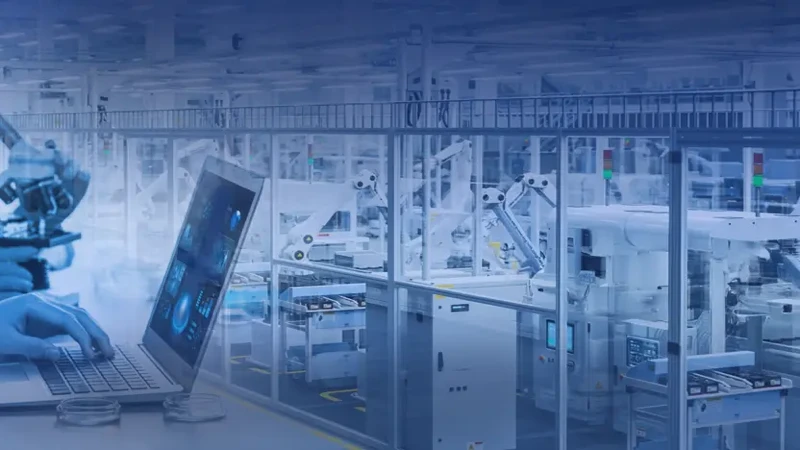
Penn State has been awarded $20 million from the National Science Foundation to lead one of 20 teams nationwide building AI-enabled programmable cloud laboratories, under NSF's new Programmable Cloud Laboratory program (the agency's core contribution to the U.S. government's Genesis Mission). Led by Distinguished Professor Joan Redwing (Materials Science and Engineering), with Stephanie Law (Penn State) and Yufei Ding (UC San Diego) as co-PIs, LATTICE is one of the 20 teams in the nationwide PCL Test Bed network. The broader network includes institutions such as Argonne National Laboratory, Carnegie Mellon, MIT, the University of Pennsylvania, and UC San Diego. The LATTICE project will build a remotely accessible, AI-orchestrated laboratory infrastructure — combining autonomous thin-film deposition, workflow orchestration, real-time monitoring, and LLM-guided experimental design — to dramatically accelerate thin-film materials discovery for semiconductor and quantum technologies.

More highlights →